Aluminium Window Systems: Technical Advantages and Energy Efficiency in Construction
2026-02-23
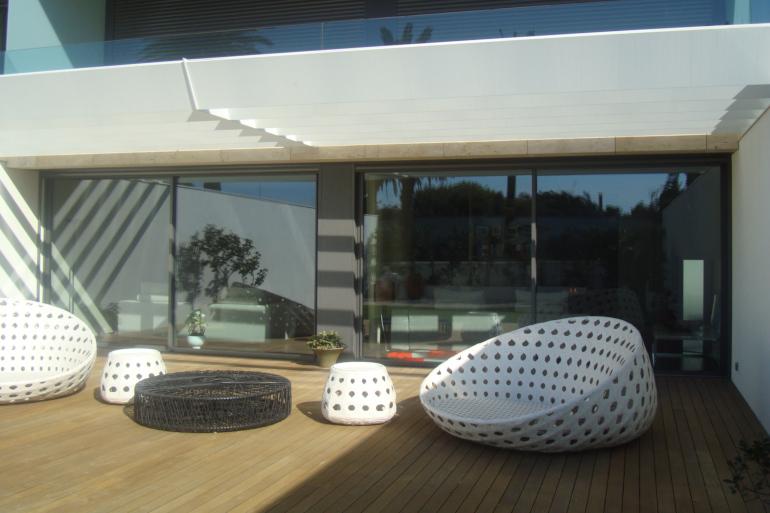
Advantages of aluminium window systems: thermal performance, durability, and efficient architectural solutions
Aluminium window systems now play a central role in the design of building envelopes, being widely used in residential, commercial, and public projects. Technological advancements in extrusion systems, thermal break solutions, and sealing systems have enabled aluminium to establish itself as a technical solution capable of meeting contemporary demands for thermal performance, durability, energy efficiency, and architectural freedom.
The choice of window system is a key decision affecting the overall performance of the building envelope, influencing aspects such as thermal and acoustic comfort, energy efficiency, durability of construction elements, and the aesthetic quality of the façade.
STRENGTH-TO-WEIGHT RATIO AND STRUCTURAL EFFICIENCY
One of aluminium’s main advantages lies in its excellent strength-to-weight ratio. It is a structurally efficient material that allows for relatively slender profiles while maintaining adequate levels of stability and structural performance.
Its lightness also offers significant construction benefits, namely:
- Easier transport and handling on site;
- Reduction of permanent loads associated with the building envelope;
- Greater efficiency in façade system assembly and installation;
- Possibility of creating large openings with contemporary aesthetic solutions.
Thanks to extrusion technology, it is possible to develop profiles with complex geometries and integrated structural reinforcements, allowing adaptation to different applications such as casement windows, sliding systems, curtain walls, or large glazed surfaces.
THERMAL PERFORMANCE AND ENERGY EFFICIENCY
Historically, aluminium was associated with low thermal insulation levels. However, current systems incorporate thermal breaks, typically using glass fibre-reinforced polyamide bars that thermally separate interior and exterior profiles.
This solution significantly reduces heat transfer through the frame, improving the thermal performance of the building envelope. When combined with high-performance double or triple glazing, aluminium systems can achieve competitive thermal transmittance (Uw) values, exceeding current regulatory requirements.
Key benefits include:
- Reduced heat losses in winter and heat gains in summer;
- Improved indoor thermal comfort;
- Reduced building heating and cooling demands;
- Contribution to meeting energy efficiency regulations.
WEATHERTIGHTNESS AND ACOUSTIC PERFORMANCE
Another key aspect is performance regarding air, water, and wind tightness. Modern aluminium systems incorporate advanced sealing solutions — EPDM gaskets, drainage systems, and precision hardware — enabling high performance in standardized tests.
When properly specified and installed, these systems offer:
- High air tightness, reducing infiltration and drafts;
- Excellent resistance to rainwater;
- Adequate wind load resistance;
- Improved acoustic insulation when combined with appropriate glazing.
This is particularly important in dense urban environments or areas with high external noise.
DURABILITY AND CORROSION RESISTANCE
Durability is one of the most valued characteristics of aluminium systems. The material naturally resists corrosion due to the formation of a protective oxide layer.
For construction applications, profiles are further protected by surface treatments such as:
- Powder coating;
- Anodizing;
- High-resistance finishes against UV radiation and environmental exposure.
These treatments ensure long-term aesthetic and functional stability, even in demanding outdoor environments such as coastal or polluted urban areas.
As a result, aluminium window systems offer:
- Long service life;
- Low maintenance requirements;
- Dimensional and functional stability over time;
- Good cost-benefit ratio over the system lifecycle.
ARCHITECTURAL FLEXIBILITY AND FINISH OPTIONS
Aluminium extrusion technology allows for great geometric freedom, offering designers high flexibility.
This enables integration into various architectural styles, from contemporary buildings with large glazed surfaces to renovation projects where aesthetic integration is essential.
Main advantages include:
- Wide variety of system types (casement, tilt-and-turn, sliding, lift-and-slide, façades);
- Possibility of minimalist solutions;
- Wide range of colours and finishes;
- Compatibility with different glazing types.
This versatility enhances architectural expression and maximizes natural light.
SUSTAINABILITY AND RECYCLABILITY
Aluminium also offers important environmental advantages. It is a 100% recyclable material that can be reused indefinitely without significant loss of properties.
Recycling aluminium requires only a fraction of the energy needed for primary production, reducing environmental impact.
Thus, aluminium systems contribute to:
- Circular economy strategies;
- Reduced environmental footprint of buildings;
- Compliance with sustainability certifications.
In a context where construction increasingly prioritizes energy efficiency, durability, and architectural quality, aluminium window systems remain a robust technical solution capable of meeting current industry demands.
GO BACK